
Ireland, Identity, and Integration
From division to dialogue in an Ireland of rapid change

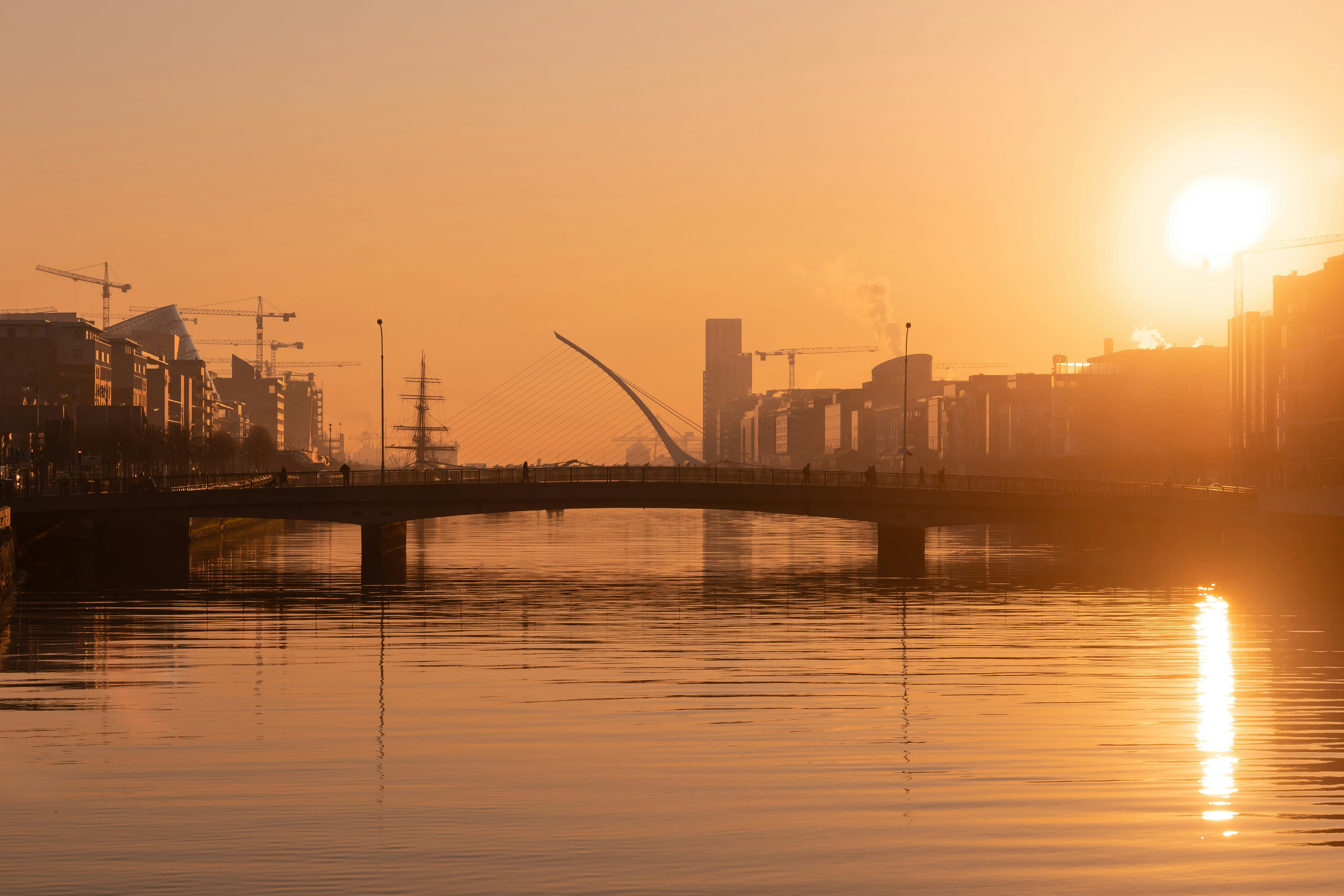
Walt Whitman wrote ‘I am large, I contain multitudes’. But we are now living at a time when an increased emphasis on identity often requires people to prioritise aspects of themselves to the exclusion of other parts of the self. The focus on equality, diversity and inclusion overlooks the level of the self, and can result in an oversimplification of complex issues such as integration, resulting in rigid and oversimplified political and philosophical positions that allow no space for manoeuvre, discussion, or of diversity at the level of thought or ideas.
Uncertainty is important. The poet John Keats (1795-1821) in a famous letter to his brothers in 1817 wrote about what he termed ‘negative capability’ which he explained as ‘when man is capable of being in uncertainties, mysteries, doubts, without any irritable reaching after fact and reason.’ He wrote that this was a quality that formed ‘a Man of Achievement’. Around two and a half thousand years ago the Oracle at Delphi declared Socrates the wisest man in Athens. Socrates, confused by this, concluded that he was considered wise because he knew he did not know. This wisdom of not-knowing can be contrasted with contemporary society when people are often certain that their truths, their way, their beliefs, their religion, their political or philosophical viewpoints are the correct ones, with others being condemned.
In 2015, Jonathan Haidt and Greg Lukianoff wrote an article for the Atlantic magazine called The Coddling of the American Mind. The article was about the problems being caused on American campuses by the trend to get rid of ideas, words and subjects that might cause offence or discomfort. The article was one of the magazine’s most-read pieces ever, and the two men went on to write a book with the same title in which they point out that it is a ‘great untruth’ to think of the world as divided simply into goodies and baddies. This simplistic division of people can be seen in Ireland today where people often feel certain about which identity, group, religion, belief, or political standpoint is good.
Sometimes we have clear identities for ourselves and others. But what is the self? Who are you? Who am I? Can we, or others, be reduced to factors of identity or are these, in fact, reductive and over-simplified designations rather than helpful and enriching both for us and for others?
In a recent widely read article in The Irish Times, Stripe founder John Collison pointed out that Ireland’s population growth is the third fastest in the EU after Malta and Luxembourg. He argued that there isn’t enough housing or infrastructure and there is an insufficient energy supply to keep up with these changes and that the stress created by this shortage ‘frays Ireland’s social fabric and drives political polarisation’. This, I suggest, inhibits integration.
Ireland is changing rapidly, political polarisation is ramping up, and there is increasing religious diversity too that feeds into polarisation, identity, and the complexity of integration. In 1961, the population of Ireland was 2.8 million and 95% of people were Catholic. As a child in the 1970s I never heard of the word Islam, let alone met a Muslim. The most exotic religious presence we had in our primary school classroom was two girls from the Church of Ireland. Adherents of religions such as Islam and Hinduism were not even counted in Ireland until the census of 1991 as their numbers were so small. Since then, however, the religious make-up of Ireland has changed rapidly. The last census, in 2022, recorded the population at just over 5.1 million with Catholics making up just 69% of the population (3.5 million) compared to the 95% peak of 1961. Many of these are cultural Catholics for whom being a Catholic (amongst other things) involves going to weddings and funerals in churches, celebrating Christmas, and baptising children as a ritual to bring together friends and family. It’s not necessarily about religious belief or Catholic doctrine.
Catholicism is not the only aspect of religion in Ireland that is changing. Between 2011 and 2022, the number of Hindus rose by 220% to over 33,000; Muslims increased by 70% to over 80,000; Orthodox Christians grew by 127% to over 100,000; and those with no religion surged 186% to almost three-quarters of a million (736,210).
There is, arguably, an anti-Catholic sentiment now evident in Ireland. At a gig for Catherine Connolly in advance of the presidential election, for example, one band, the Mary Wallopers, said: ‘This song is dedicated to Fianna Fail, Fine Gael, all the rich people in the country, the landlords, the F*ckin Catholic Church, all those c*nts’. This type of rhetoric has almost been normalised and has implications at a time when diversity and inclusion are considered so important. Alongside an increase in anti-Catholic rhetoric, there is also increasing Islamophobia and antisemitism, and the Indian community (often Hindus) have been targeted with abuse too.
Integration is about a group maintaining its own culture at the same time as participating in the new society but how can this be done? What does integration mean in terms of alcohol? Or in terms of prohibitions on interaction between the sexes, particularly as we move towards a more gender-neutral society. Would gender neutral toilets further isolate Muslim women for example? In addition, when it comes to religion, no religion is itself a monolith; each religion is hugely diverse. Even atheism is diverse. There are many versions of God that people do not believe in.
What about dress? Whilst most people are comfortable with Muslim women wearing the hijab, which only covers the hair, some feel uneasy about the niqab, where only the eyes are visible. Does integration extend to dress? And where do we draw the line? Do we, for instance, also accept female genital mutilation (FGM) which can be important for some communities in terms of identity? In addition, integration is a two-way issue. Should Ireland’s national public service broadcaster, RTÉ, stop broadcasting the Angelus? These are questions for consideration. Where does the line lie between integration and assimilation?
The issues mentioned so far relate to cultural integration but there is also an integration that can take place at the level of the self. The British psychiatrist, philosopher and neuroscientist Iain McGilchrist argues that the brain’s two hemispheres attend to the world in different ways. His books, The Master and his Emissary (2009) and the massive The Matter with Things (2021) develop this brain-hemisphere hypothesis. The latter won the 2021 Scientific and Medical Network Book Prize, and Professor Charles Foster of Oxford University said of it that it ‘is one of the most important books ever published’ – adding, ‘And yes, I do mean ever’.
McGilchrist writes about how the hemispheres attend to the world differently. This is not the pop-psychology of the 1990s, which focused on what each hemisphere does. Both hemispheres are involved in almost everything we do but it is how they do it that matters. He uses the metaphor of a bird to illustrate this: the bird must focus intently to spot and eat the seed or worm it needs to survive, yet it must also remain aware of the skies and the surrounding ground to be alert to predators. Both the focused attention and the broad awareness to the wider world are important.
To elborate: McGilchrist points out that the right hemisphere appreciates uniqueness, understands melody and harmony, appreciates time and flow, has a sense of humour, can read body language, is capable of sustained attention, understands the contextual whole, is concerned with quality rather than quantity, sees the world as alive, and has a capacity to empathise.
The left hemisphere, on the other hand, excels at manipulation, is intent on grabbing and getting things, is preoccupied with detail, loses the sense of the living body and instead focuses on body parts, sees the world as made of isolated static ‘things’ that are fixed and often mechanical, is unreasonably optimistic and ignores looming dangers, is concerned with theory, and with a map of the world rather than the living world. It offers simple answers to complex issues and questions. It is also very good at designing and implementing bureaucratic systems. McGilchrist writes that ‘unfortunately the left hemisphere, knowing less, thinks it knows more’.
The dominance of the left hemisphere means an inability to see the whole. It also results in an overemphasis on theory at the expense of experience, a tendency to see the world in black and white, the inability to see interconnectedness and flow. This dominance of the left-hemisphere is evident in Ireland today in bureaucratic systems (including in third-level education), in simple answers to complex problems, and in the use of TV screens, computers and phones that ‘supplant direct face-to-face reality’ and a disconnection from our natural alive interconnected world.
In conclusion, the rapidly changing population of Ireland comes with a rapidly changing religious structure. Shortages in infrastructure and rapid change are contributing to increased polarisation but so too is the dominance of the left-hemisphere with its black-and-white way of thinking of the world. Integration can operate at the level of the self as well as on the level of the group, community, country. We, as a society, need to be open to different beliefs, to be open to conversation on difficult topics and to move away from seeing the world, people, and groups in simple dichotomies of ‘goodies’ and ‘baddies’.
An interesting article on how life and society is evolving- well done Colette!
I disagree with the idea that integration is a two way street. As an immigrant, it is my job to assimilate. How can a (previously) homogeneous culture integrate to a multitude of different cultures and religions?